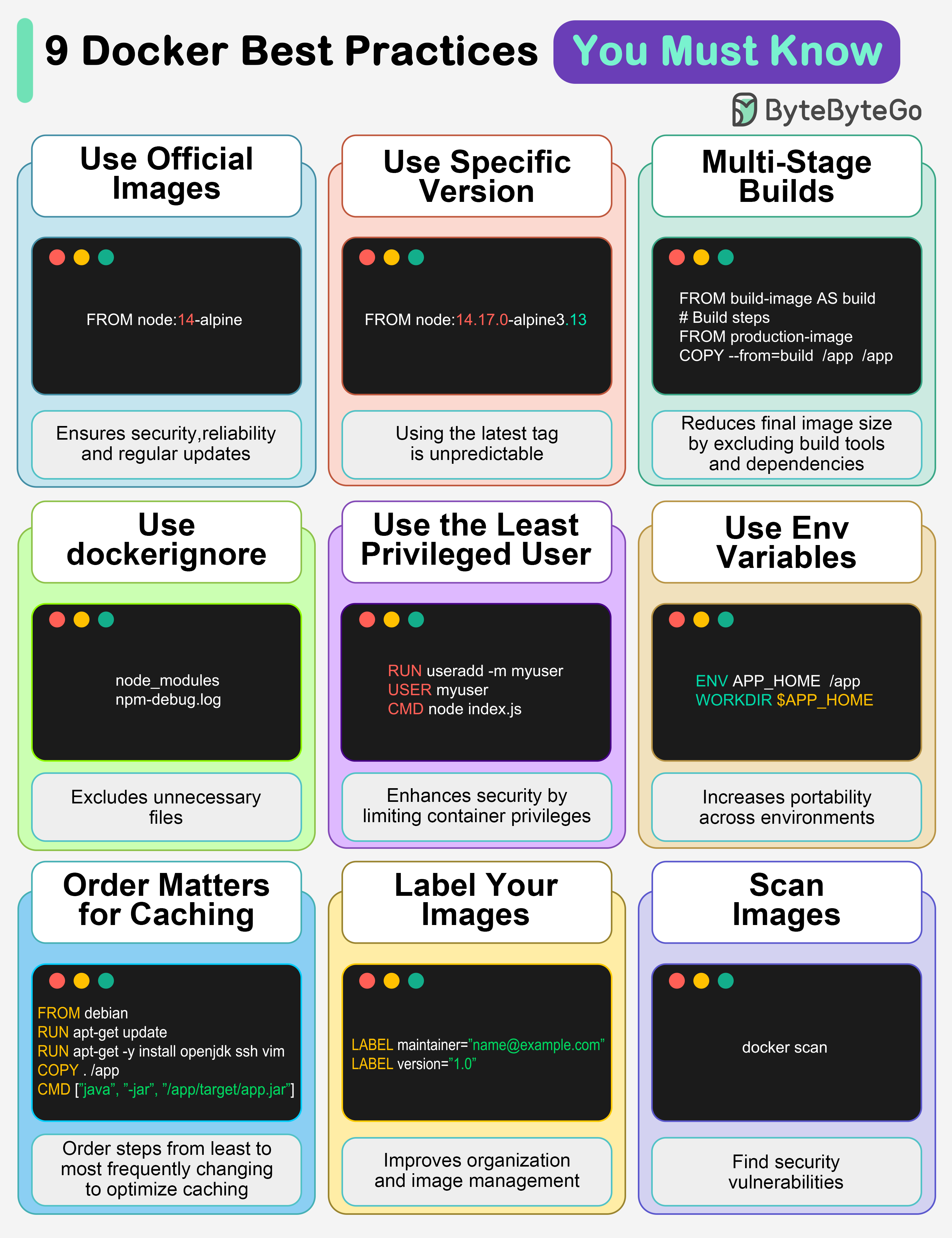
1. Use official images
This ensures security, reliability, and regular updates.
2. Use a specific image version
The default latest tag is unpredictable and causes unexpected behavior.
3. Multi-Stage builds
Reduces final image size by excluding build tools and dependencies.
4. Use .dockerignore
Excludes unnecessary files, speeds up builds, and reduces image size.
5. Use the least privileged user
Enhances security by limiting container privileges.
6. Use environment variables
Increases flexibility and portability across different environments.
7. Order matters for caching
Order your steps from least to most frequently changing to optimize caching.
8. Label your images
It improves organization and helps with image management.
9. Scan images
Find security vulnerabilities before they become bigger problems.
Over to you: Which other Docker best practices will you add to the list?