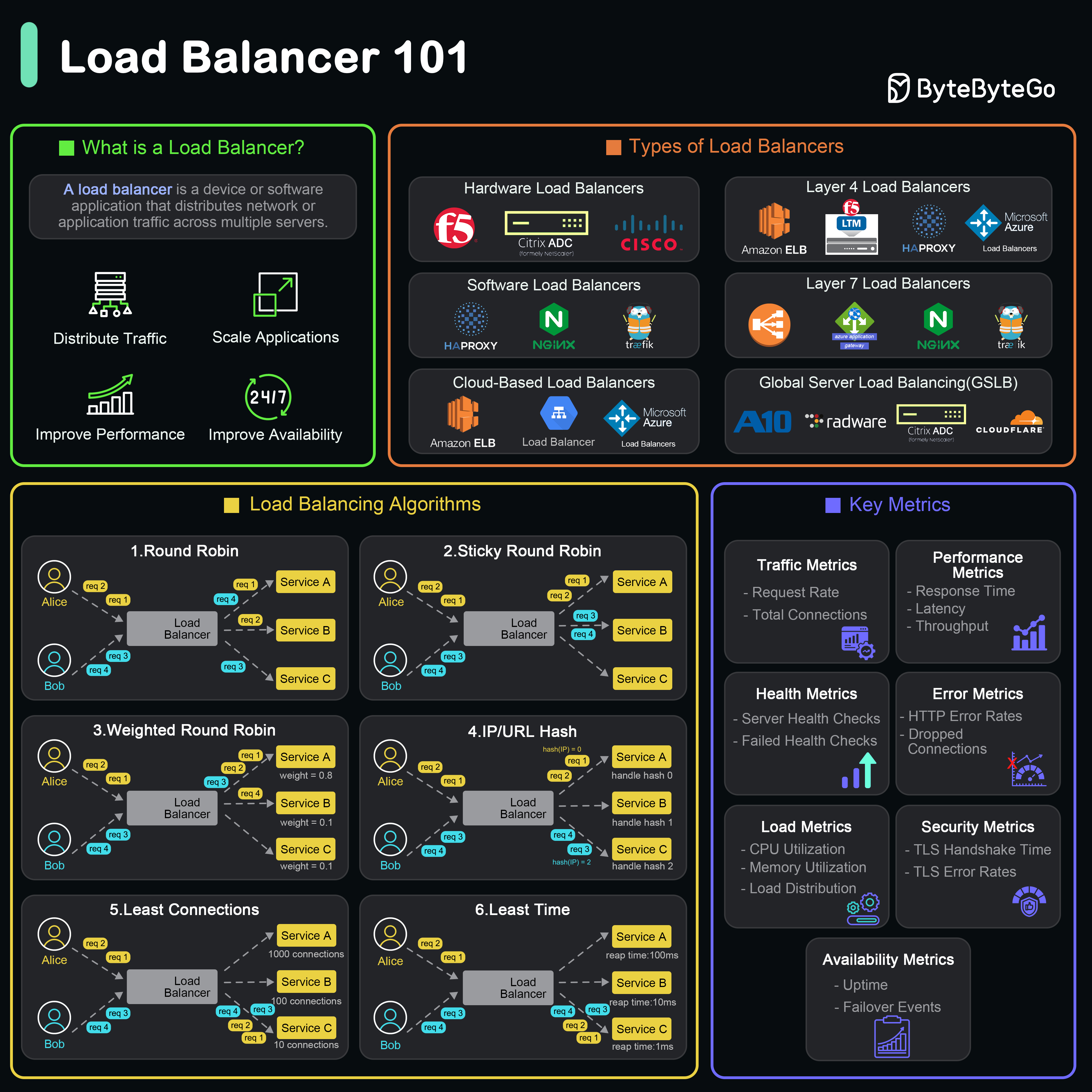
A load balancer is a device or software application that distributes network or application traffic across multiple servers.
What Does a Load Balancer Do?
- Distributes Traffic
- Ensures Availability and Reliability
- Improves Performance
- Scales Applications
Types of Load Balancers
- Hardware Load Balancers: These are physical devices designed to distribute traffic across servers.
- Software Load Balancers: These are applications that can be installed on standard hardware or virtual machines.
- Cloud-based Load Balancers: Provided by cloud service providers, these load balancers are integrated into the cloud infrastructure. Examples include AWS Elastic Load Balancer, Google Cloud Load Balancing, and Azure Load Balancer.
- Layer 4 Load Balancers (Transport Layer): Operate at the transport layer (OSI Layer 4) and make forwarding decisions based on IP address and TCP/UDP ports.
- Layer 7 Load Balancers (Application Layer): Operate at the application layer (OSI Layer 7).
- Global Server Load Balancing (GSLB): Distributes traffic across multiple geographical locations to improve redundancy and performance on a global scale.